
Short stories
All my short stories listed below
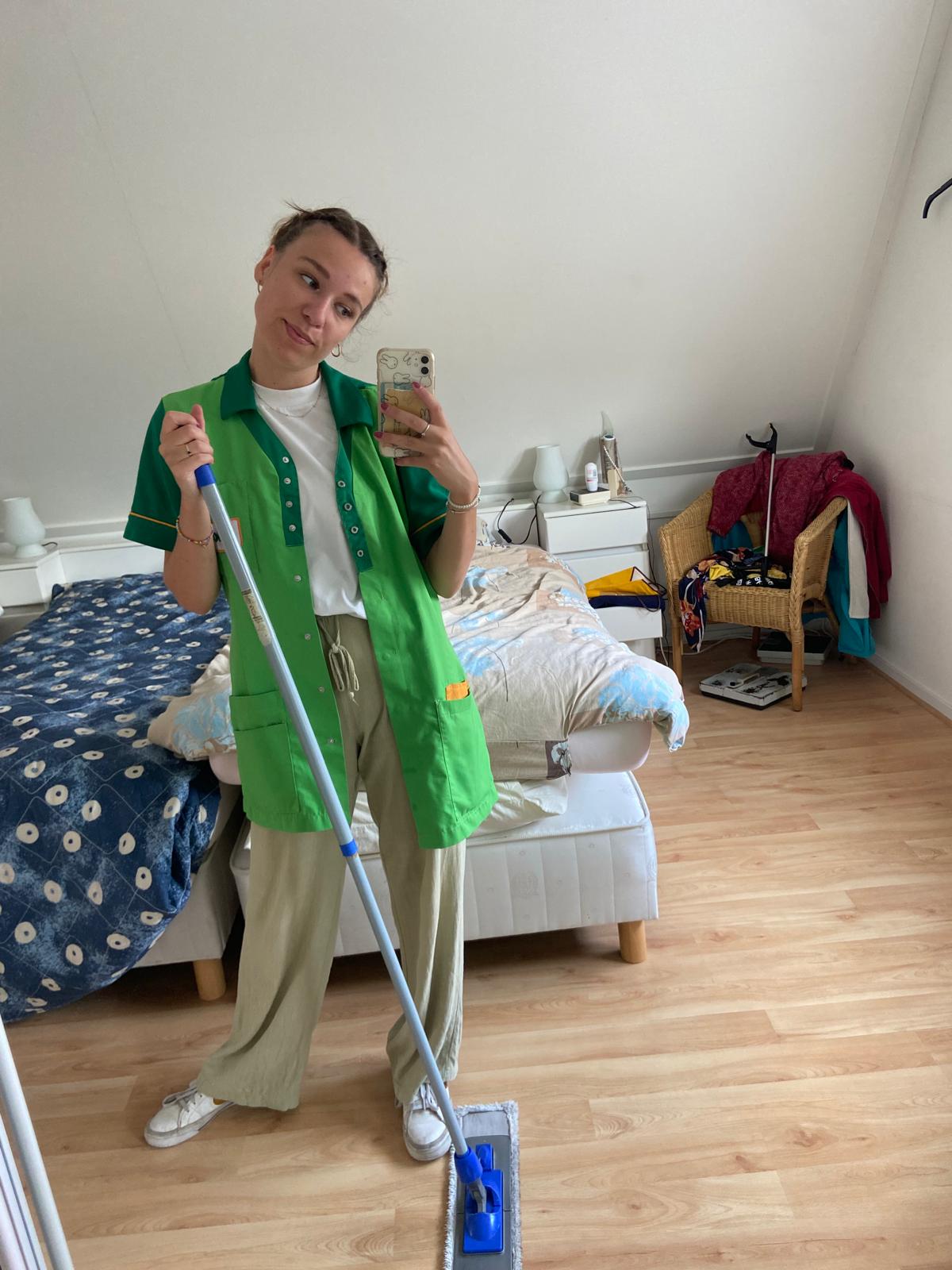
What the elderly people taught me
“Honey, give me the sponge, I will show you!” Ms. Van der Spoel kindly puts a hand on my back, guiding me away from the ladder on which I was standing to reach the top window. Her fragile body replaces mine as she shuffles up the small stairs. Step by step she reaches the top. Her hands, shaking with old age, seem to remember exactly what to do. With a firm, smooth movement the window is clean. I give her an impressed applause, then replicate her exact movement a few moments later. “Oh, child, I am so proud of you,” she says. “Show your mom at home what I taught you, okay? Every woman should know.”
Summertime is my favourite time of year. Not only because of the sparkle the usually grey Netherlands gains when the sun shows her face, but also because during the summer I work for elderly people. It might seem strange, a twenty-something getting excited over pouring a cup of tea, a game of Scrabble, or a walk around the park. Yet for me, summer work puts my life into perspective. It teaches me something about how I want to grow old – and how I believe care should look.
From helping a woman fix her TV remote to gossiping about an annoying neighbour, my idea of care became personal, individual, and time-consuming. Care was not just about doing practical tasks; it was about knowing someone, remembering them, and being remembered in return.
Ms. Van der Spoel stood in the doorway on my last visit. It was warm outside, summer still in full bloom, but in a few days I would move back to The Hague as my studies were starting again. I told her I was sure the new staff member would be much better at cleaning the windows. A watery laugh followed before she let me go, telling me she missed me already.
This idea of care is, of course, utopian. Care is always vulnerable to coercion, gender exploitation, and situational dependency. Even the work I did was organised through an institution, and therefore inevitably structured and regulated. Still, the difference between care as a relationship and care as a system became painfully clear to me last summer.
Previously, I saw my clients throughout the entire summer. Last year, I did not see any of them twice. Due to limited subsidies, the organisation I worked for began prioritising efficiency. Upon opening the door, many clients reacted with visible frustration when they saw I was yet another unfamiliar face to get used to. Many of the people I worked with struggled with dementia and loneliness. Seeing the same trusted person helps. Knowing what to expect helps. Not having to rush helps. Efficiency took this away.
The phone rang one afternoon and Mevrouw Van den Berg picked it up. I could not hear what was being said, but she grinned from ear to ear. “My friend Joke is coming to visit tomorrow,” she said. “So now, counting you as well, I will have three hours of visitors this week. How lovely!” I stayed half an hour longer that day. So she had three and a half hours. That was the least I could do.
All the elderly people I worked for shared one thing: they were deeply vulnerable to a system that decided what their care would look like. Often, I had to rush from one house to the next. Rarely did I leave with the feeling that I was finished, but my allotted ninety minutes were up. Clients had no say in how long I stayed. Someone from the organisation would assess their home, create a checklist, and determine a timeslot.
A white plastic folder adorned their coffee tables. Inside it read: do laundry, make bed, clean toilet and shower, vacuum, dust, mop kitchen floor. The checklist never said: drink a cup of coffee, ask how they are, make them feel safe. Yet according to my experience, those were exactly the things they needed most. After completing the listed tasks, little time remained.
If they truly had a choice, I am convinced visits would be longer. Doctors would take time to explain calmly, instead of rushing through instructions that would soon be forgotten. People would live more comfortably. Our neoliberal society, however, denies interdependence and prioritises efficiency, measurability, and cost reduction – even when the cost is human dignity.
One Wednesday morning, I rang the doorbell of a new client. “Good morning, Ms. Van den Berg. It is so nice to meet you. I am Pleun, I am here to help you today.” I had to repeat my name several times before she understood. She did not like it. So we settled on Pleuntje. The next week, I rang the doorbell again. She did not remember me. That was okay. I introduced myself again. She still did not like my name. We settled on Pleuntje. This continued for five weeks. On my final Wednesday before returning to The Hague, Ms. Van den Berg opened the door and said, “Good morning, Pleuntje.” She remembered.
The system of care we currently have may be efficient, cost-saving, and easy to oversee – and that does count for something. But recently, I ran into Ms. Van den Berg at the grocery store. She looked confused and did not greet me. I had become a stranger again.
Imagine needing help, and every day a new face enters your only safe space: your home. They rummage through your belongings, dust your favourite picture, move the pile of books you meant to give away. They change the bed you sleep in every night. Another stranger undresses you, bathes you, sees you without the protection of clothes. You are confronted daily with what you can no longer do yourself by complete strangers.
During my summers, I saw too many tears, too much shame, too much confusion. I could reassure, hold hands, and fill glasses of water – but I could never truly solve the problem. Only a different idea of care within the system can.